
Ask an agency that sells app development to show you their work and you will get a portfolio of other people’s products. Nice screens, a logo wall, a case study that ends the week the app shipped. What you will almost never get is an answer to the only question that matters: what happened in month seven, when the camera behaved differently on one handset, when Apple rejected the build for a reason nobody anticipated, when a real person tapped something at six in the morning and it broke.
We got tired of not being able to answer that question with our own work. So we built one, and partnered in it.
Wave Wellness launches in October 2026, on the App Store and Google Play at the same time. Product, design, the iPhone app, the Android app, the API, and the admin behind it, all built in house by the same team that builds for clients. Wave Agency is a partner in it.
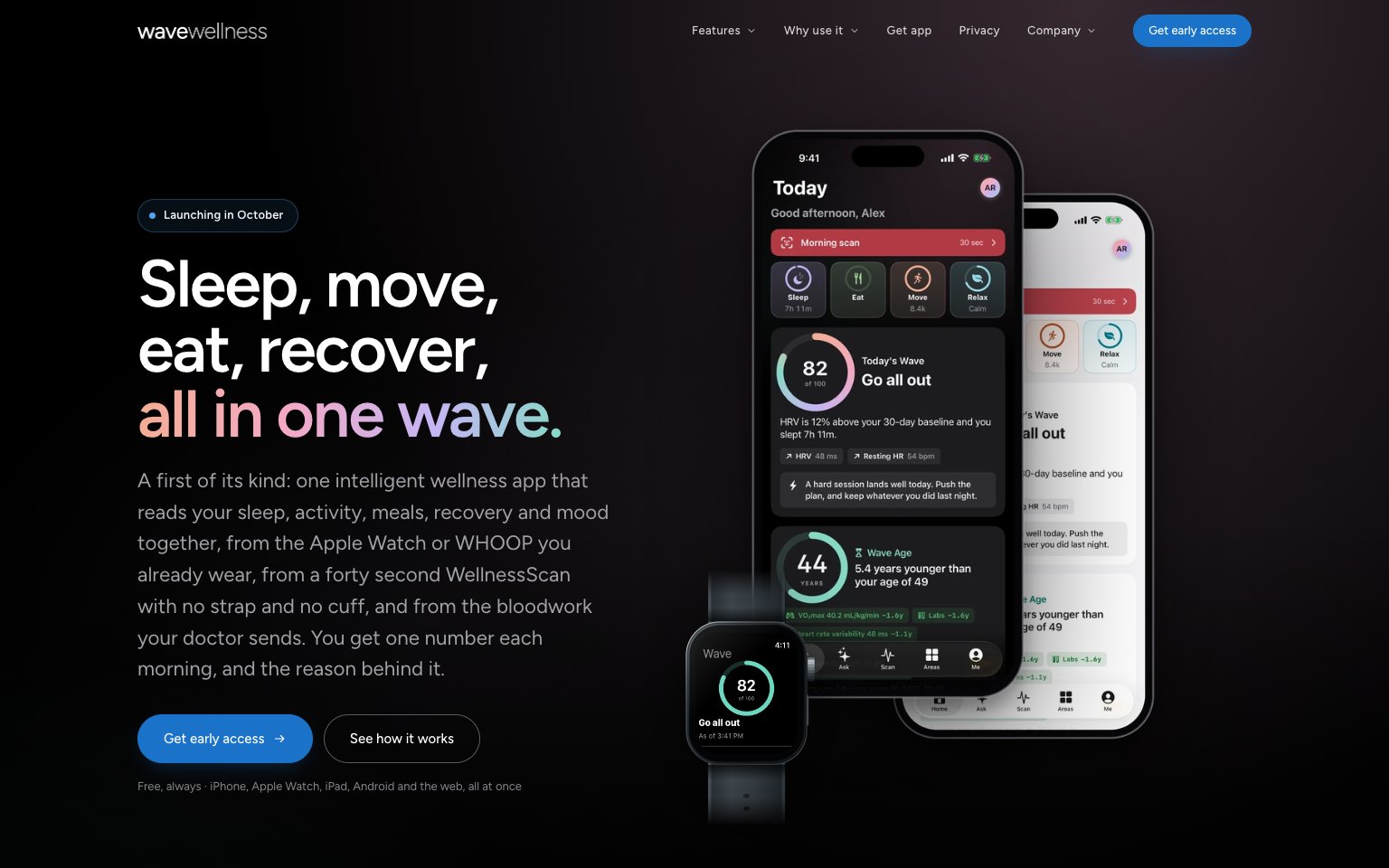
Every agency in this business sells app development on somebody else’s portfolio. We wanted to be able to say something different in a pitch: here is one we built, on both stores, running on our servers, with our name on the support email. If it goes down at seven in the morning, it is my phone that rings. That changes what you are allowed to claim.
Wave Agency
One question, every morning
Most health apps are a filing cabinet. They collect everything a phone, a watch, a ring or a band can record, and they hand it all back to you as charts. The work of turning that into a decision is left entirely to the person holding the phone, which is exactly the work they wanted help with.
Wave Wellness answers one question instead: what kind of day is today, and what is the one thing worth doing about it.
Four things sit behind that answer.
The Daily Score. Sleep, movement, food, recovery and mood, resolved into a single number, with the plain-language reason behind it. Not a ring to close. A number, and a sentence saying why it is what it is.
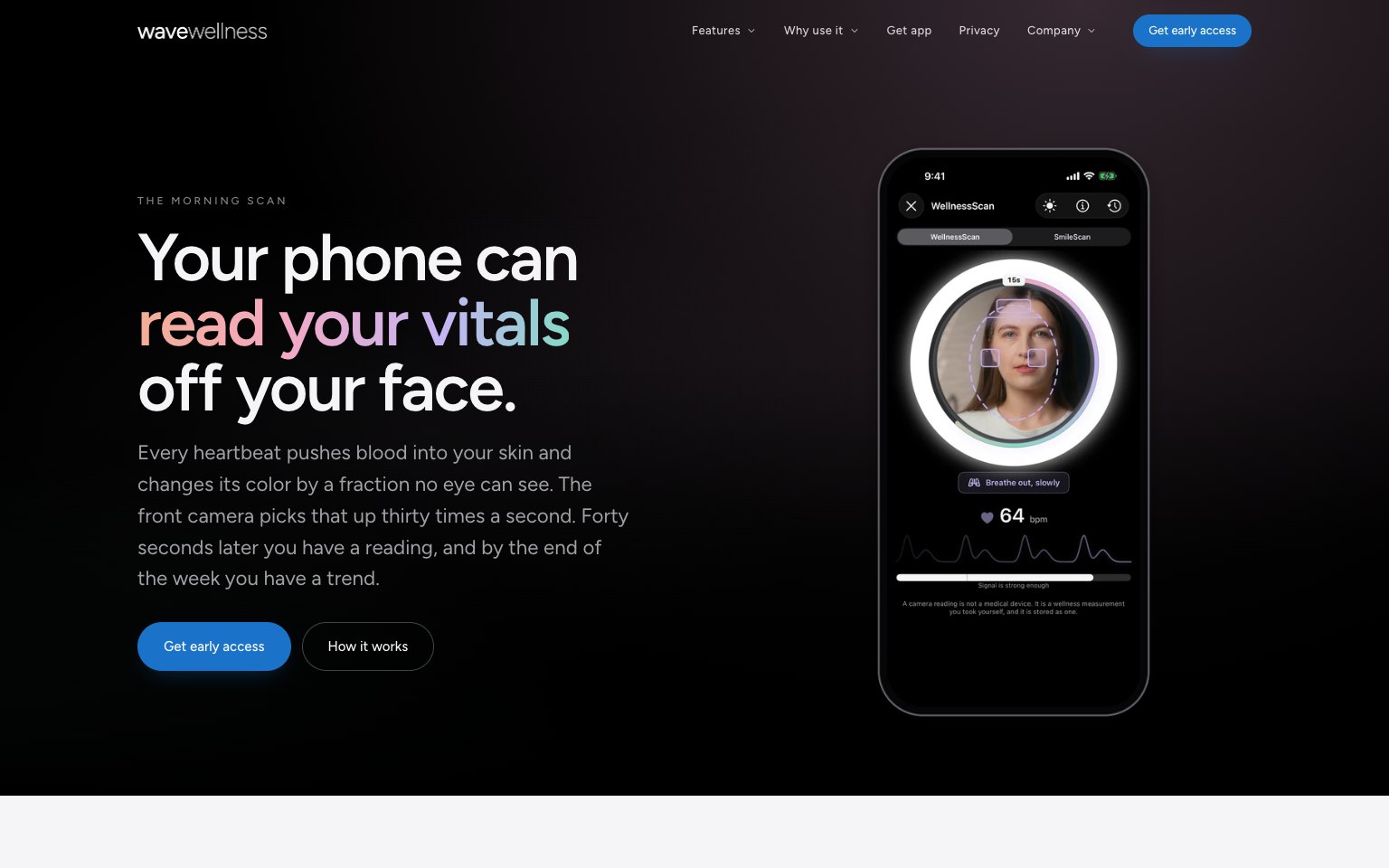
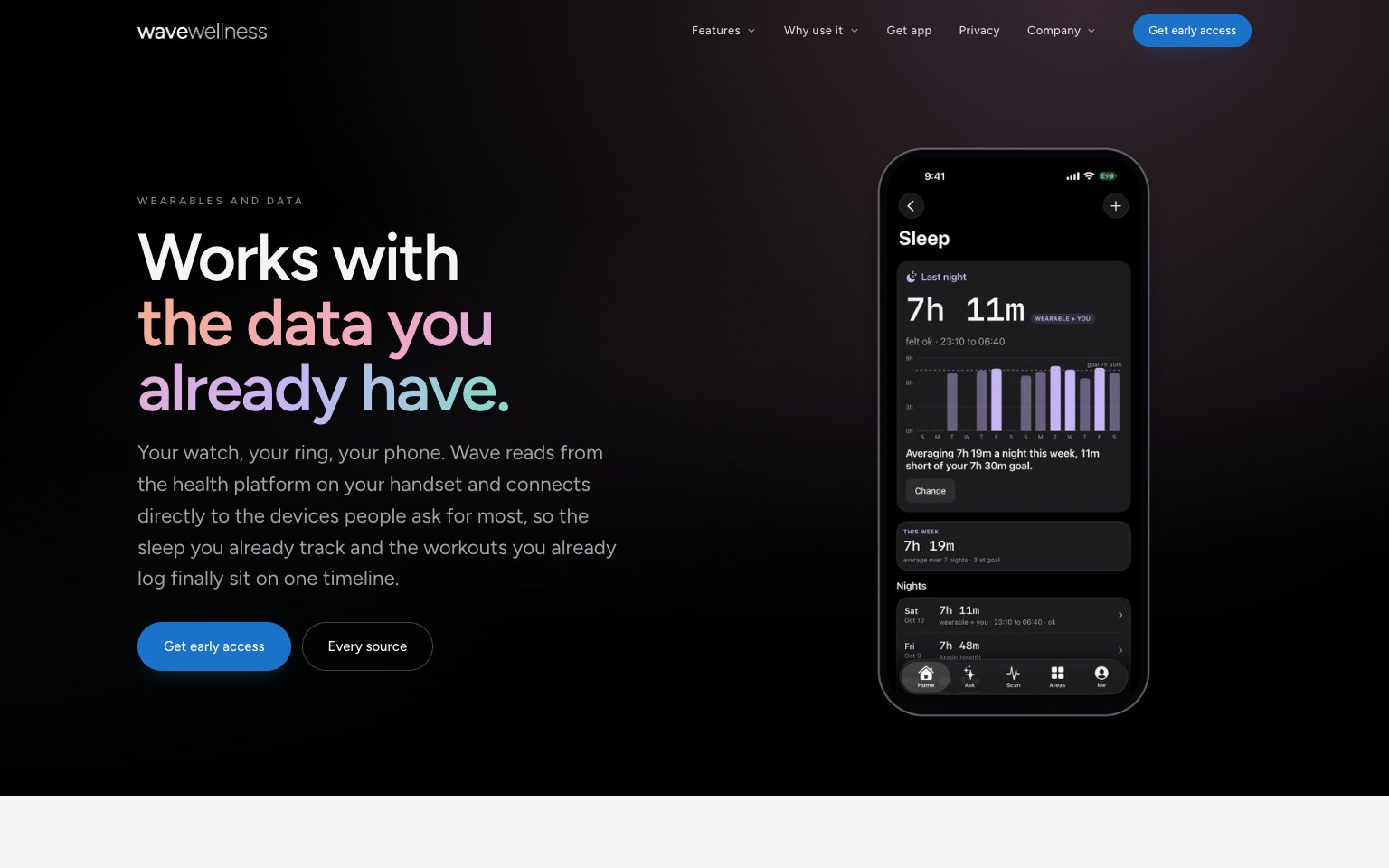
WellnessScan. Heart rate, breathing rate, heart-rate variability and alertness, read off the front camera in forty seconds. No strap, no cuff, no hardware to buy. The phone that is already in their hand is the sensor.
SmileScan. Teeth and gums, from two photos a week, read against the person’s own first three. It reports change over time, never a diagnosis.
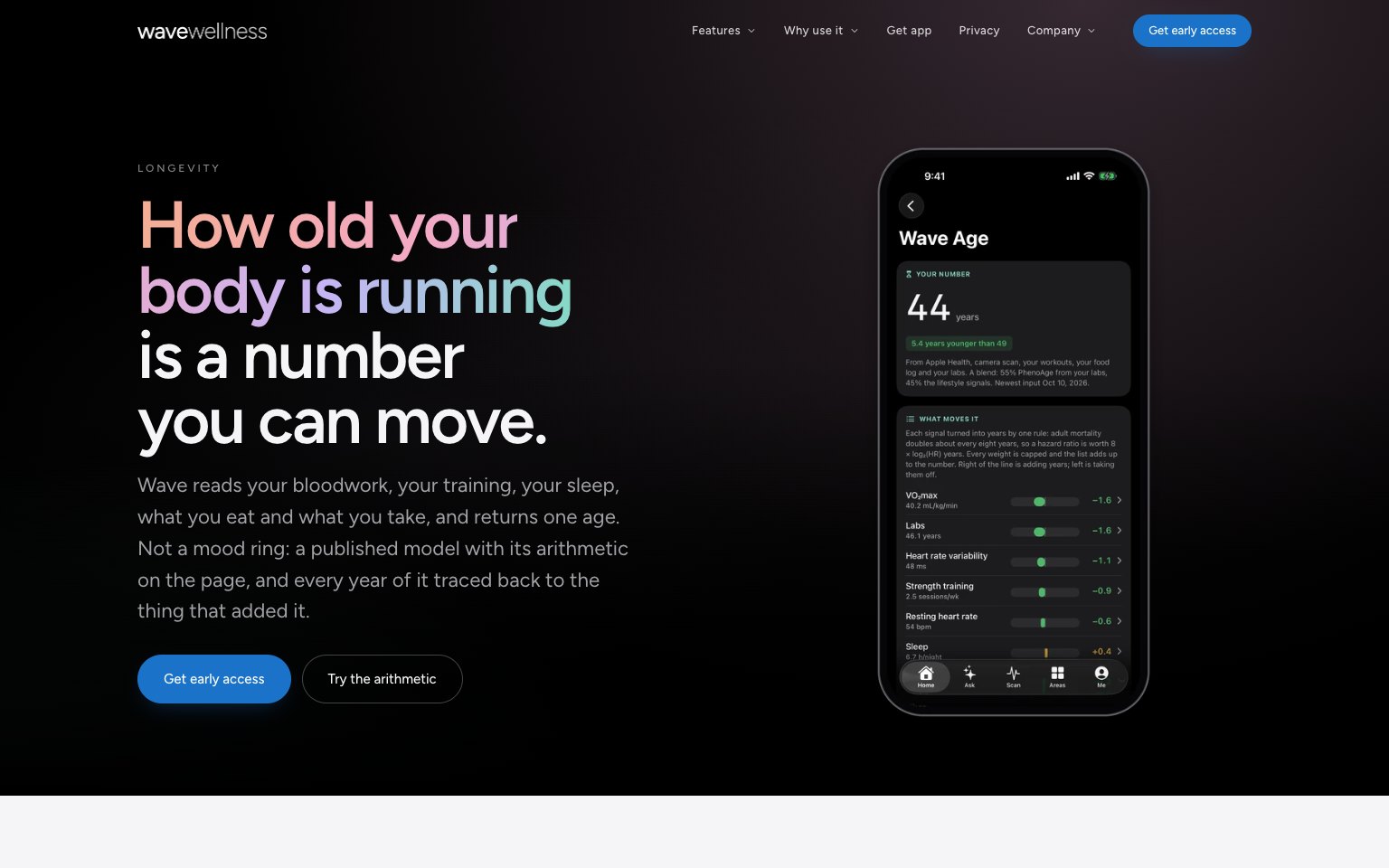
Wave Age. A single biological age, built from bloodwork and lifestyle on the published PhenoAge model, with every year attributed to the signal that produced it. Not a mystery number. A number you can take apart.
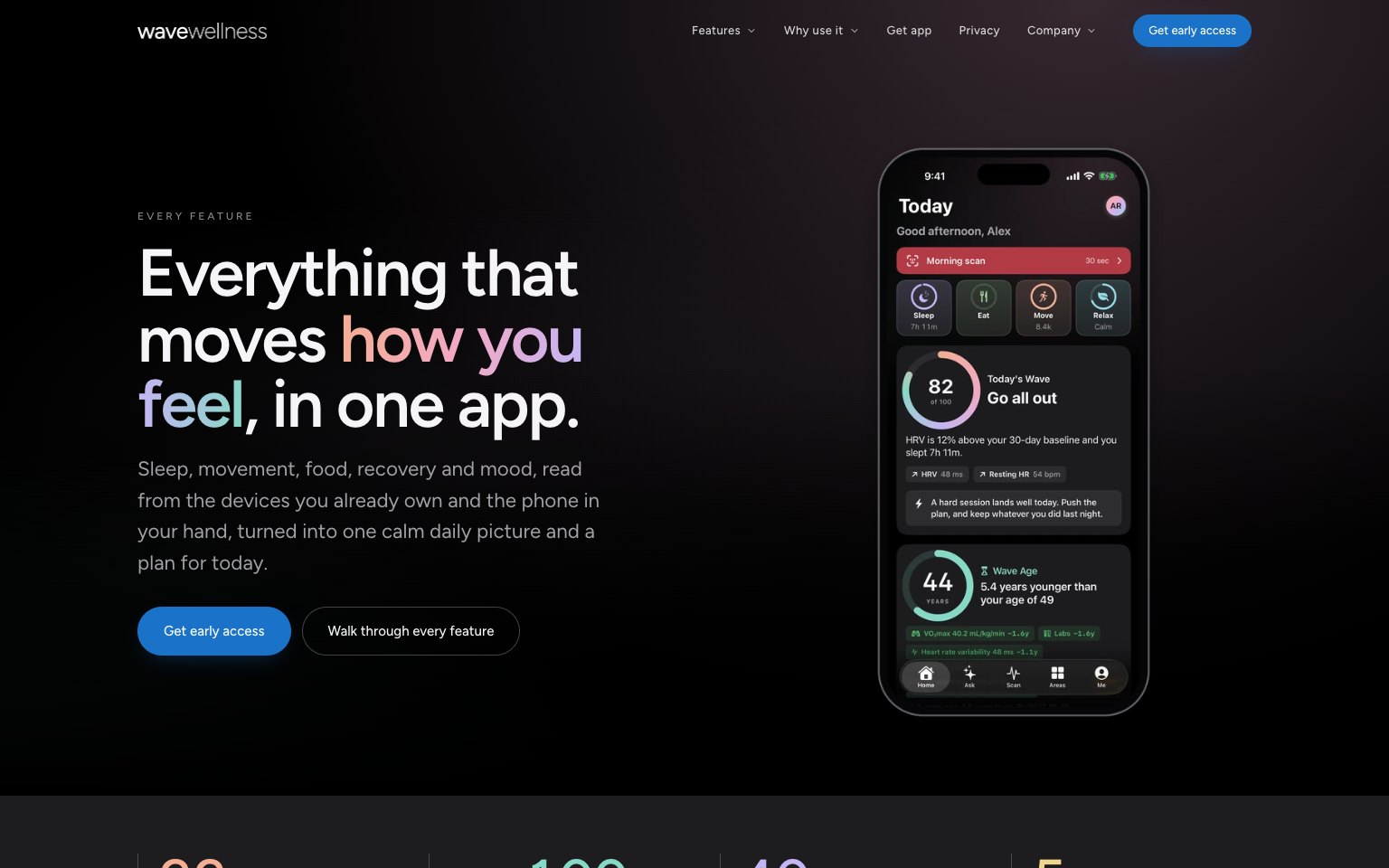
Wearables, optional. It connects to whatever somebody already wears, and it still works for the person who wears nothing at all. That second case is the one most of this category quietly ignores.
What it deliberately does not do
Wave Wellness is a general wellness product. It does not diagnose, treat, cure or prevent any disease, and nothing in it replaces a clinician. The figures it reports, including those from WellnessScan and SmileScan, are estimates rather than clinical measurements.
That paragraph is not boilerplate we buried in a settings screen. It is a product constraint we designed against, and it cost us features.
The easiest version of this app is the one that tells you that you have a problem. That app converts better, and I will not ship it. The moment a number off a phone camera starts sounding like a diagnosis, you have made something that belongs in front of a regulator, and more to the point you have made something that can frighten somebody at six in the morning over a reading that is an estimate.
We took things out over this. If we cannot describe what a number means in one honest sentence, it does not go in.
Wave Agency
Both platforms, the same day
Wave Wellness is native on both: Swift on iPhone, Kotlin on Android, released together rather than one platform now and the other a quarter later.
That is a more expensive decision than it sounds, and it is a deliberate one. Shipping iOS first and Android “soon” is the industry default because it is cheaper, and it is also how half of an audience learns that they are the half that waits.
Every client who has ever asked us for an app has asked the same thing in the second meeting: can we do iPhone first and Android later. The honest answer is that later usually means never, because the budget is spent and the enthusiasm is gone. We wanted to prove to ourselves that a small team can carry both to the line at once. Now when we say it is possible, we are not speculating.
Wave Agency
What it changed about how we work
Running a platform under a live consumer product teaches things a client engagement structurally cannot, because a client engagement ends. This one does not.
We have carried this through App Store review. We have shipped the second release because the first one was wrong. We have done the work nobody writes into a quote: the empty states, the permission prompts, the day the camera pipeline behaves differently on one particular handset, the notification that has to be useful enough to earn its place on a lock screen.
The part of app development that is genuinely hard is not the part clients think they are buying. Everybody budgets for the screens. Almost nobody budgets for what the app does on day one when there is no data in it yet, and that is the screen that decides whether somebody ever opens it again.
We know that because we got it wrong in this app and had to fix it. I would rather learn that on our money than on a client’s.
Wave Agency
The site is the same build
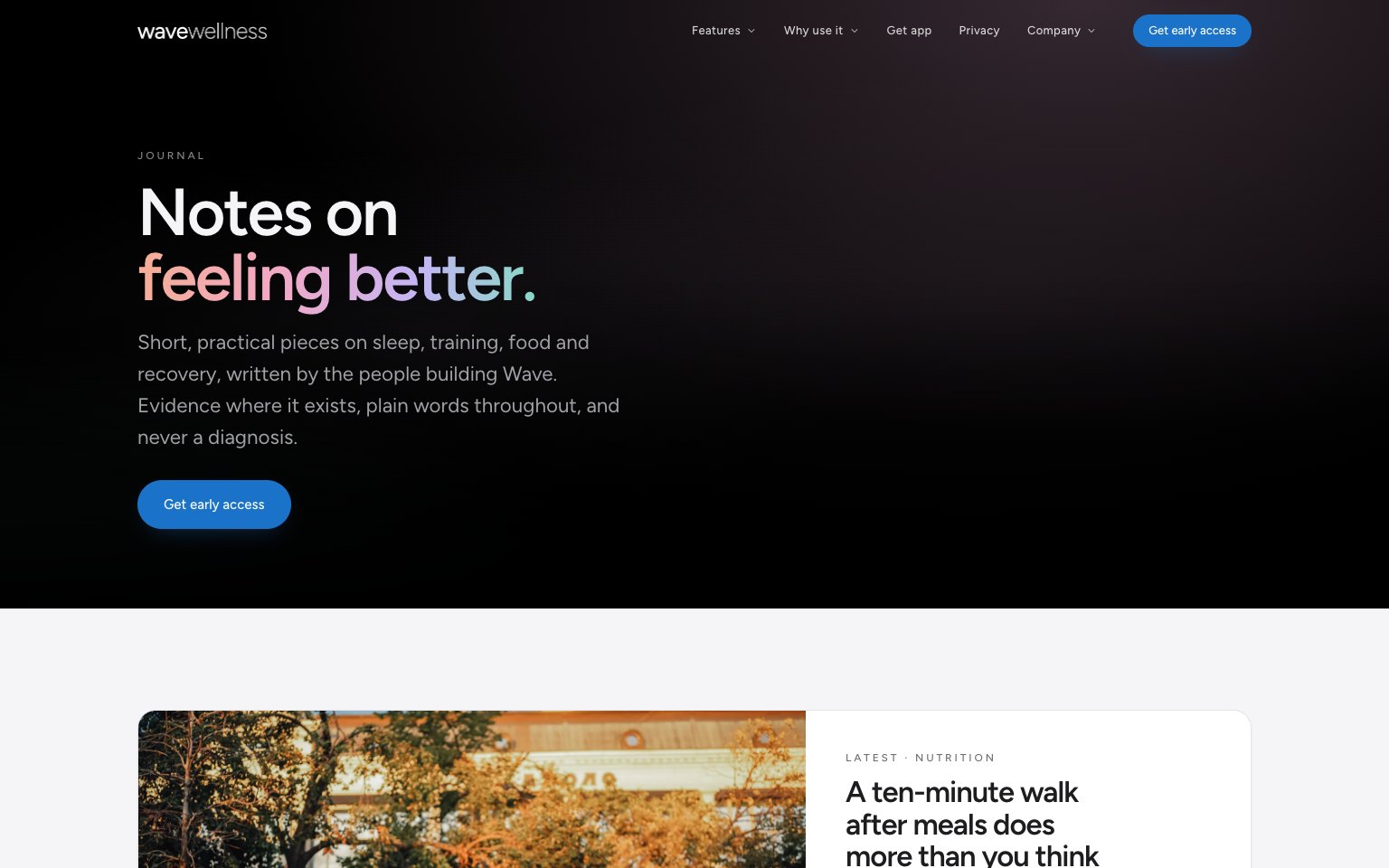
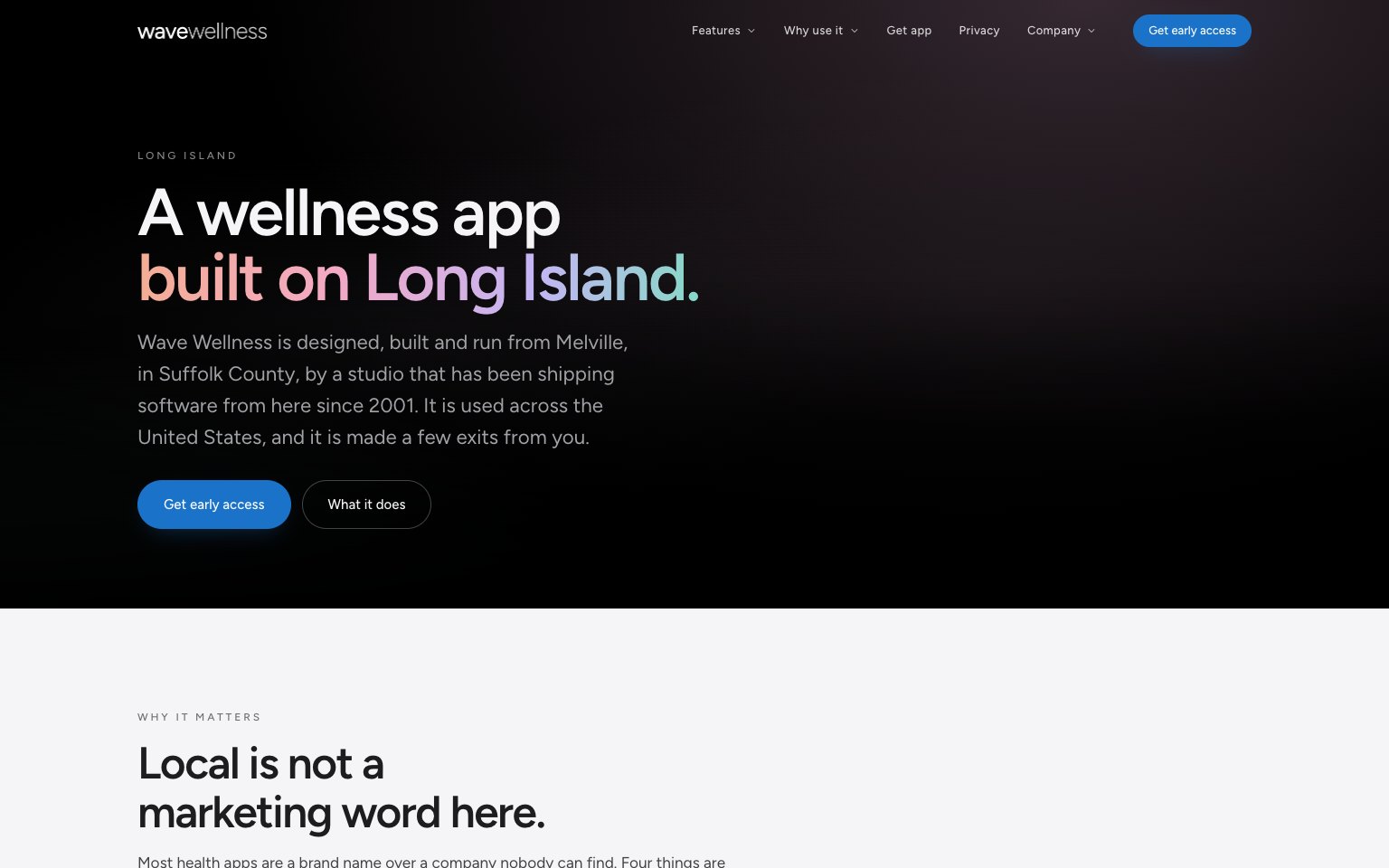
The app is not the whole of it. The marketing site, the journal on it, the pages for practices and the Long Island page are one build, shipped and run by the same team, which is the point we keep making about how we work.
Where to find it
wavewellness.app is live now with the waitlist. The apps arrive on the App Store and Google Play in October 2026.
If you want the longer version of what is in it and what it runs on, that is on our Wave Wellness page. If you are weighing up building something yourself, the relevant page is mobile app development, and the relevant fact is that the team described on it is the same team that shipped this.
We built this one. Let’s build yours.


